
The reform of electronic invoicing is here and it concerns all merchants.
-> From 2026, you will need to be able to receive electronic invoices.
-> In 2027, you will also have to issue them.
Good news: Techfive is ready for reform!
With Techfive solutions, you reduce paperwork, limit errors and save time for your business. Here are the essentials to approach the transition with confidence.
What exactly is electronic invoicing?
Electronic invoicing is not a simple PDF sent by email. It is a structured and secure system, designed to facilitate exchanges between companies and automate part of the tax obligations.
- Certified platforms for sending and receiving invoices
- Standardized formats that allow software to automatically read information
- Automatic e‐reporting and e-invoicing of certain data to the tax authorities.
The objective is simple: reduce VAT fraud, make data reliable and modernize accounting management. For you, the merchant, this means especially less manual tasks and more fluidity in your exchanges.
Reform of electronic invoicing: what are the dates to keep in mind?
The official schedule is already set:
Date | Obligation | Companies concerned |
September 1, 2026 | Mandatory receipt of electronic invoices | All enterprises subject to VAT |
September 1, 2027 | Mandatory issuance of electronic invoices | VSEs, SMEs, self-employed, traders |
To summarize, from 2026, you must be ready to receive electronic invoices from your suppliers. One year later, you will also have to issue your own invoices in this format.
E-invoicing and e-reporting: what are the differences?
These two concepts often come up, and it is easy to confuse them.
Let’s look at two concrete examples to understand the difference between the two and what it means for traders.
1. E‐invoicing: automatic issuance and sending of invoices and sales data to the State
Jean, a wine merchant in Lyon, supplies several restaurants in his neighborhood with wines and spirits.
With the arrival of e-invoicing, Jean must now:
- Issue an electronic invoice
- Send it to an approved platform
- The restaurant owner receives the invoice in digital format (by email)
- The state retrieves key data.
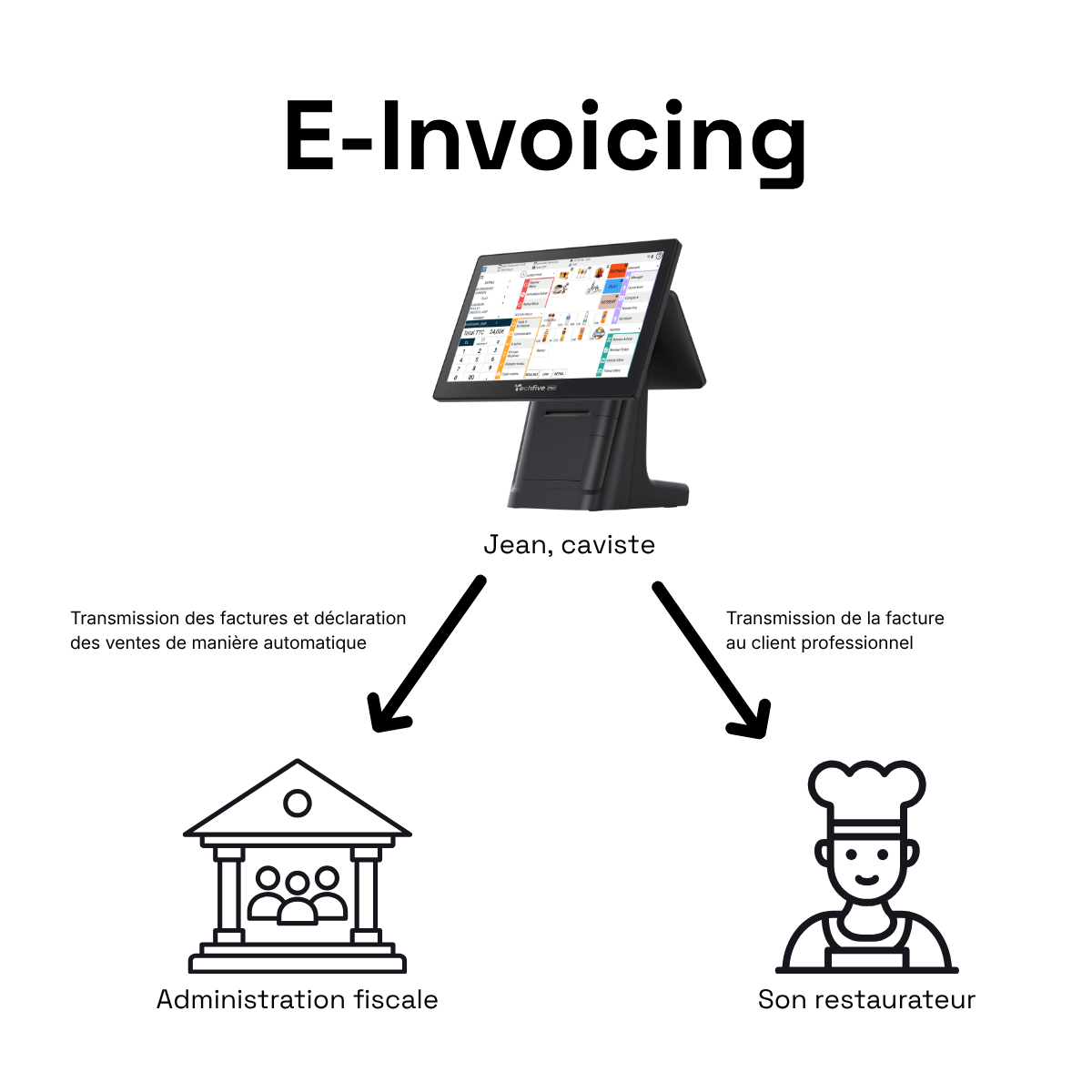
To summarize, e-invoicing therefore concerns exchanges between professionals (so in B2B), with the transmission of each invoice to an approved platform, in electronic format.
2. E‐reporting: automatic sending of sales data to the State
On the other hand, Jean sells a bottle of wine to Martine (an individual customer). In that case, Jean:
- Does not have to issue an electronic invoice.
- But it must regularly transmit its sales data (amounts, VAT, etc.) to the State through an approved platform.
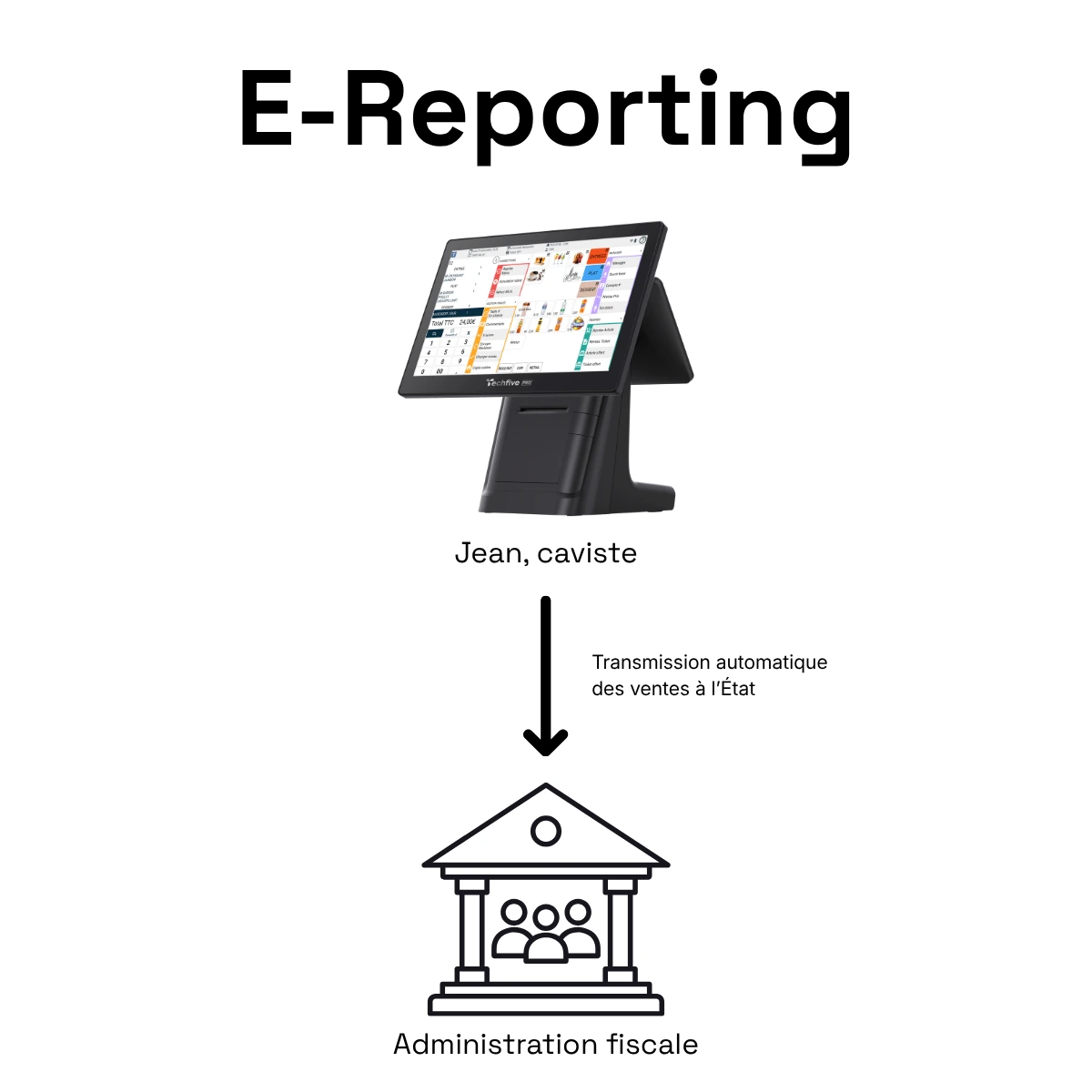
To summarize, e-reporting concerns transactions between professionals and individuals (B2C), and involves the transmission of sales data to the State. In this case, the possible invoice does not need to be in e-invoicing format.
E-reporting also applies to international B2B, i.e. transactions between a French professional and a foreign professional.
What will this change in your daily life?
This reform involves some adjustments, but nothing insurmountable:
Choose a tool compatible with the reform.
Select a certified platform to send your invoices.
- Understand the expected formats (e-invoicing and e-reporting), even if your software will do the work for you.
These changes may seem technical, but above all they bring a better organization.
What are the risks of non-compliance with the e-invoicing reform?
The French finance law 2026 provides for several penalties depending on the type of failure to comply with the electronic invoicing reform:
If you do not issue your invoices in electronic format (e‐invoicing)
→ €50 per non-electronic invoice, with a ceiling of €15,000 per year.
If you do not use an approved platform to receive your invoices
The process is done in several steps:
3-month formal notice to bring you into compliance
If nothing is done: fine of €500
New 3-month deadline
If the breach persists: fine of €1,000
- Then an additional €1,000 every three months as long as the situation is not resolved
If you do not provide your transaction data (e‐reporting)
→ €500 per missing transmission, capped at €15,000 per year.
A tolerance exists in the event of a first offence
No penalty is applied if this is your first violation in the current year and the three previous years, and you regularize spontaneously or within 30 days after the administration’s first request.
How do you prepare now?
No need to wait for 2026 to act. A few simple steps allow you to anticipate calmly:
- Choose a solution compatible with the reform (certified or in the process of being certified).
- Check compatibility with your current hardware: cash register, management software, accounting tools.
- Involve your chartered accountant: they can guide you in good practices.
- Test the issuance and receipt of electronic invoices now, even alongside your current habits.
The goal is not to change everything at once, but to gradually familiarize yourself with this new way of working.
What concrete benefits can you derive from it?
Electronic invoicing is not just a constraint. For a business with a solution such as those developed by Techfive, this can allow it to continue its activity without any complexity.
Here are the most visible benefits:
- Less paperwork: no more need to print, file or physically archive.
- Less errors: the data is structured, so it’s better controlled.
- Less disputes: the information is standardized and complete.
- Time saved: manual entry disappears almost completely.
- Automatic compliance: your tool applies tax rules for you.
- Better visibility: your invoices are centralized and easy to find.
To better understand, if we take the example of a merchant who issues 50 invoices per month. With software compatible with the electronic invoice, the merchant can save several hours of entry and verification. Over a year, this represents a real productivity gain.
How can Techfive support you in this transition?
At Techfive, we have designed solutions designed for merchants who want to achieve compliance without complexity.
Our tools are:
- Already ready for the reform of electronic invoicing
- LNE Certified
- Simple to handle
- Designed for your daily life
Our goal: to transform this tax obligation into a time-saving, productivity and peace of mind for you.
In terms of compliance, we have thought of everything. Indeed, our software has been LNE (BYCYB) certified for many years before the legal obligation.
Learn more about certification (lien)
The essentials in just 30 seconds.
- 2026: obligation to receive electronic invoices; 2027: obligation to issue them.
- The electronic invoice = structured format, via certified platforms, with automatic transmission of tax data.
- E‐invoicing = B2B invoices sent to the State; E‐reporting = international B2C/B2B sales data transmitted regularly.
- Penalties: up to €50/invoice, €500/missing transmission, and €1,000 every 3 months if non-compliance.
- Techfive: already compatible, LNE certified, simple solutions for a transition without complexity.
FAQ
Yes. All companies subject to VAT are concerned, regardless of their sector or size: traders, craftsmen, self-employed, VSEs, SMEs... Even if you issue few invoices, you will need to be able to receive them as early as September 2026 and issue them as early as September 2027.
Not necessarily. If your current solution is compatible with the reform or already certified, you won’t have to change anything.
With Techfive, all merchants can keep their hardware: the software is already ready for electronic invoicing and works with existing equipment. A simple check is enough.
The reform provides for several financial penalties:
Non-electronic invoices (e‐invoicing): €50 per non-compliant invoice, capped at €15,000 per year.
Failure to use an approved platform to receive invoices: formal notice, then gradual fines of €500, then €1,000 every three months as long as the situation is not resolved.
Absence of sales data transmission (e‐reporting): €500 per missing transmission, capped at €15,000 per year.
Tolerance: no penalty if it is the first offense and the regularization is done quickly (within 30 days).
No. In B2C, you can continue to issue regular invoices. On the other hand, you must automatically transmit your sales data to the State via e‐reporting. If your software is compatible (like Techfive), it takes care of this transmission without any further action on your part.
These articles might interest you.
Find our tips and practical tips for your activity.